
When Caring Becomes Carrying
LEADERSHIP IMPACT, AMPLIFIED
October 7, 2026 · Evelina Rog, PhD, PCC
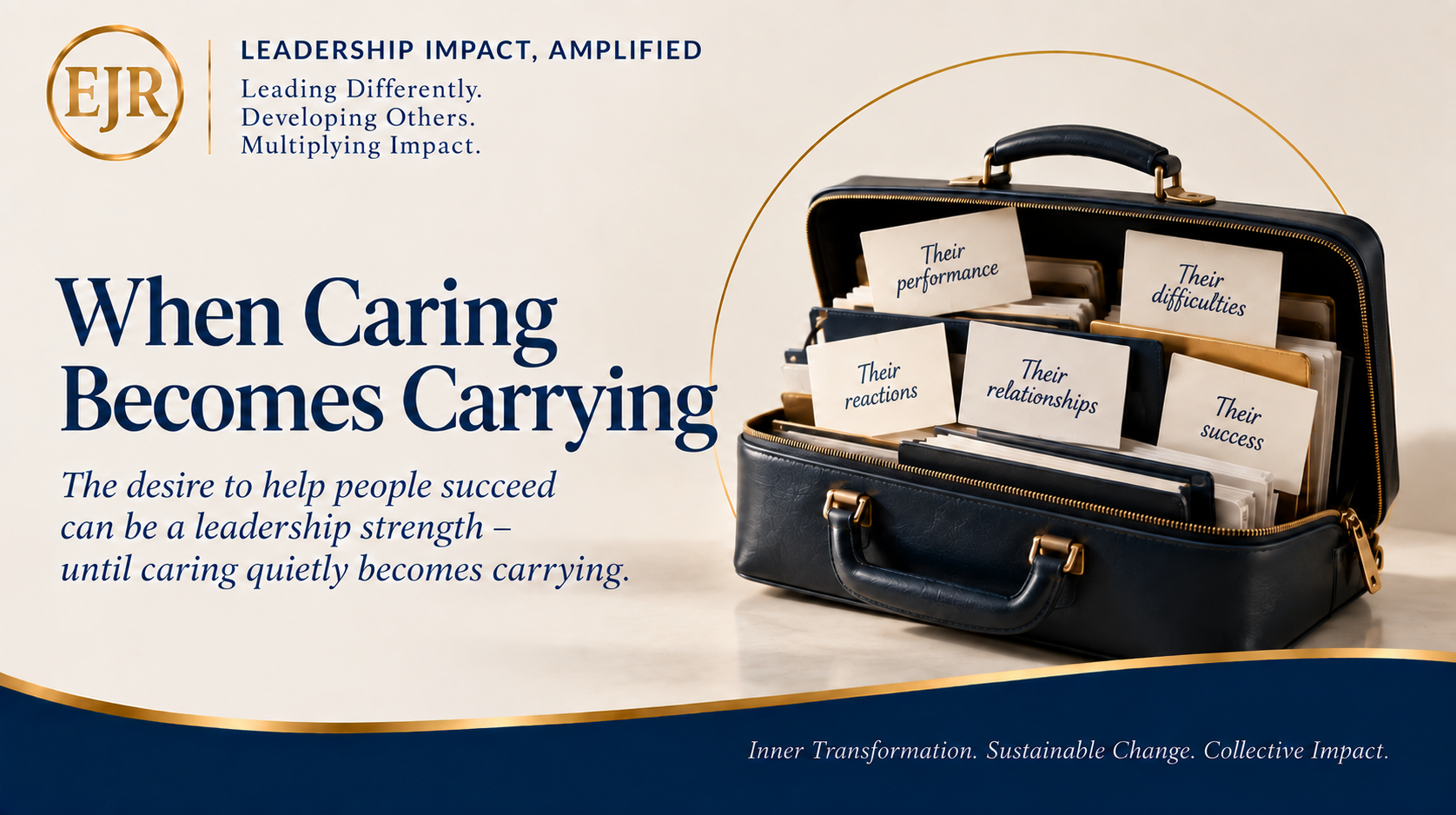
Some leaders are quick to ask what they could have done differently. They expect a great deal of themselves and are willing to look at their own part when something goes wrong. Those are valuable qualities, but these leaders often take on far more than their fair share, and the consequences add up over time.
If someone is upset, the leader asks themselves: what did I do to create this? If someone pushes back, the leader assumes they are asking too much. If a relationship becomes strained, they work harder to try to make it right.
When a leader feels they must keep others happy and avoid letting them down, they are likely taking on responsibility that isn’t theirs to carry.
How Much of This is My Fault?
This pattern can be hard to recognize because taking responsibility is generally something leaders are encouraged to do. Good leaders examine their impact. They listen to feedback, acknowledge mistakes and think about how their decisions affect others.
This is where caring can become carrying. These leaders take on another task because no one else puts up their hand, they make an accommodation because leaving the situation unresolved feels uncomfortable, and they say yes even though their cup is already overflowing. Over time, leaders take responsibility for more and more of what happens between them and others.
Taking a Fair Share of Responsibility
A leader’s actions do matter. Poor communication, unclear expectations or insufficient support can contribute to difficulties that the leader needs to own. But the other person also brings something to the relationship: their expectations, interpretations, commitments and choices. They may have misunderstood the leader’s message, or they may dislike a decision that was necessary for the leader to make.
In coaching, I often come back to a simple two-part question: What part of this should you own, and what part should others own? For a leader who is quick to take responsibility, the second half deserves as much consideration as the first.
A leader may need to clarify an expectation or acknowledge how they handled a conversation. The other person may need to follow through on a commitment or explain what support they need. Both can have something to address. Taking responsibility for one part doesn’t mean taking it all on.
When Care Gets Tangled Up With Keeping People Happy
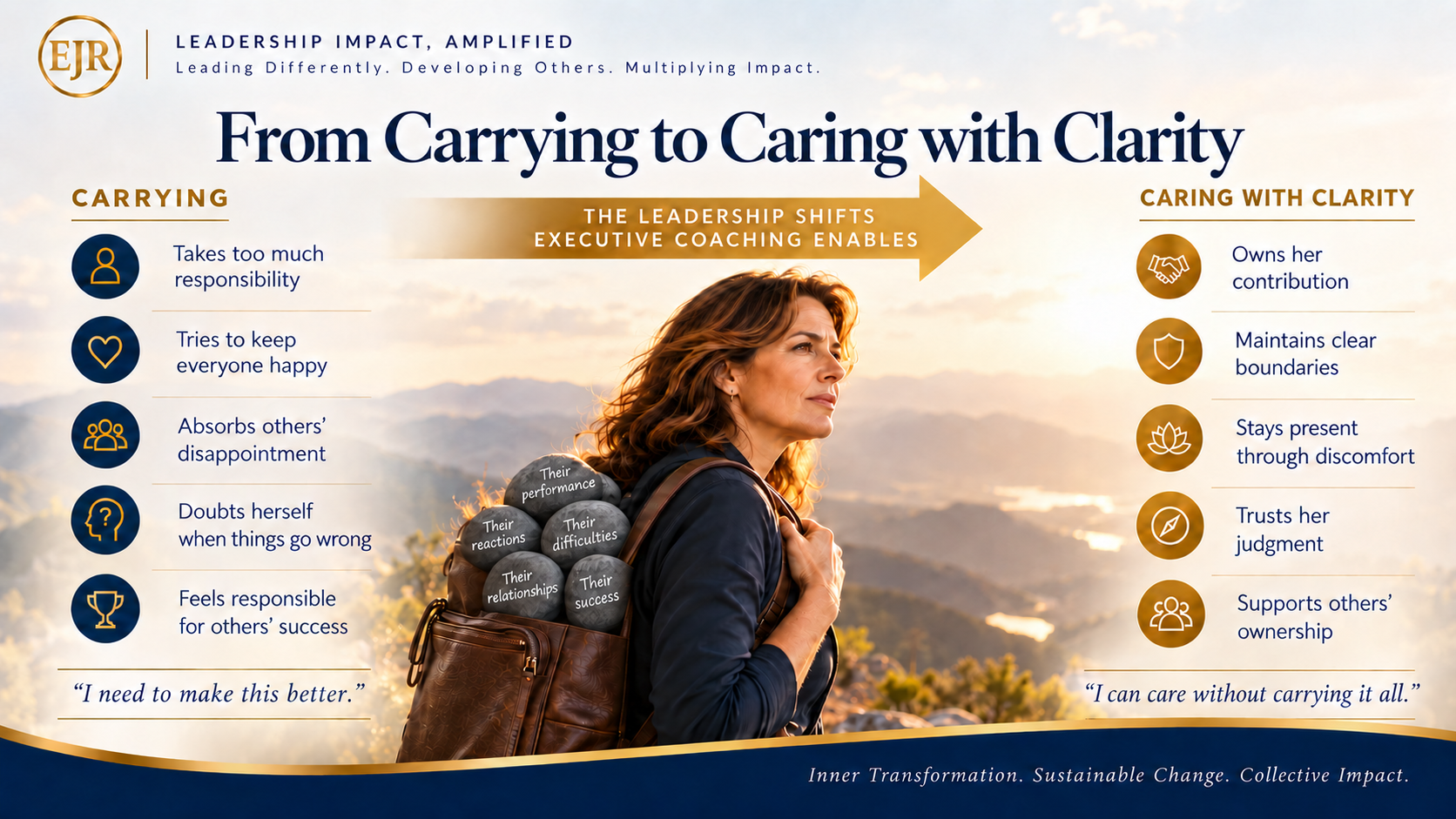
A leader can be empathetic and still become caught up in their own mind. They may notice the other person’s frustration, but then begin worrying about what it means for them. Have I upset them? Do they think I don’t care? Have I damaged the relationship? And in that moment, they start carrying, usually without awareness. Their attention moves from understanding the person and the situation to trying to work out what they have done wrong and how to make it better. They want to be fair, helpful and dependable. Letting someone down can feel inconsistent with the kind of leader they want to be.
That can make it difficult to know where generosity ends and obligation begins. A leader may be doing something generous while also trying to avoid being blamed, disappointing someone, or putting a valued relationship at risk. Understanding that helps explain why setting boundaries can be so difficult for these leaders. In fact, sometimes they do not even recognize that a boundary needs to be set. They can be in a constant mode of over-accommodating - meeting others’ needs while sacrificing themselves, and often their teams.
The Leadership Cost of Taking on Too Much
At the executive level, the impact extends well beyond an overflowing calendar. The colleague who reacts most strongly can receive the most attention. An expectation gets adjusted, an exception is made, or extra work lands with the leader. Meanwhile, others who are managing their own pressures may receive less support because they aren’t making the same demands.
If a missed commitment repeatedly leads to the leader doing more, the other person has less reason to reconsider their own approach. If blame is accepted too quickly, there may be little examination of what each person contributed or what needs to change in the organization.
The leader can also start feeling taken for granted. They have put considerable effort into making things better and wonder why it isn’t reciprocated. Resentment builds, but they continue accommodating because changing the pattern means facing the very reactions they have been trying so hard to prevent.
An executive can spend considerable time trying to make these interactions right, leaving less attention for other people and priorities. It may all feel like part of the job. But some of that effort is going toward managing others’ reactions rather than addressing what the work requires.
What Begins to Change Through Coaching
One executive I coached was compassionate and conscientious. When challenged, she could quickly start thinking about everything she had done to contribute to the problem. She was often more ready to question herself than to question how much responsibility she was being asked to take.
Through coaching, she began sorting out what belonged to her and what didn’t. She learned to offer support without automatically taking on more, and to maintain a boundary while staying engaged in the relationship. Negative reactions could still unsettle her, but she was beginning to trust her judgment without needing the other person to agree.
I recognize this shift across many clients. It starts with noticing how quickly another person’s negative reaction becomes something the leader feels responsible for resolving. In coaching, I’m interested in what makes it difficult to leave some responsibility with the other person, and what the leader worries might happen if they do.
For some leaders, the worry is that the relationship will suffer. For others, it is the fear of being seen as unhelpful, insensitive or difficult. A small, reasonable limit can feel surprisingly consequential when the leader assumes it might change how someone sees them.
From Carrying to Caring With Clarity
Coaching gives leaders room to test a different response. They learn to experiment with listening more carefully, acknowledging their contribution and address Ing what is theirs, while allowing the other person to do the same. Then comes the harder part: resisting the urge to take on more simply because the interaction still feels uncomfortable, especially when the other person refuses to take even 2% of the responsibility for what went wrong
I encourage leaders to notice what actually happens after the interaction ends, and the discomfort subsides. Does a negative reaction last? Is the relationship damaged, or is a follow-up conversation to. Lear the air simply needed? Does the person take more responsibility when there is a clear expectation that they will? Over time, that experience can help a leader trust that caring doesn’t require them to carry everything.
There will still be occasions when doing more is appropriate. The difference is deciding thoughtfully, rather than feeling compelled to act.
A leader can care about their impact without taking responsibility for the other person’s entire experience or reaction.
A Question to Take With You
Where might your instinct to take responsibility be building trust, and where might it be leaving you too much to carry and others with too little to own?
Developing Leaders Who Multiply Their Impact
EJR helps executives, teams and organizations to lead differently, develop others, and multiply their impact.
As the exclusive Canadian provider of The Academy of Executive Coaching’s Practitioner Diploma in Executive Coaching, we also develop leaders and coaches who want to build deeper coaching capability.