
Beyond Behaviour: How Coaching Helps Leaders Make the Shifts That Matter Most
LEADERSHIP IMPACT, AMPLIFIED
September 30, 2026 · Evelina Rog, PhD, PCC
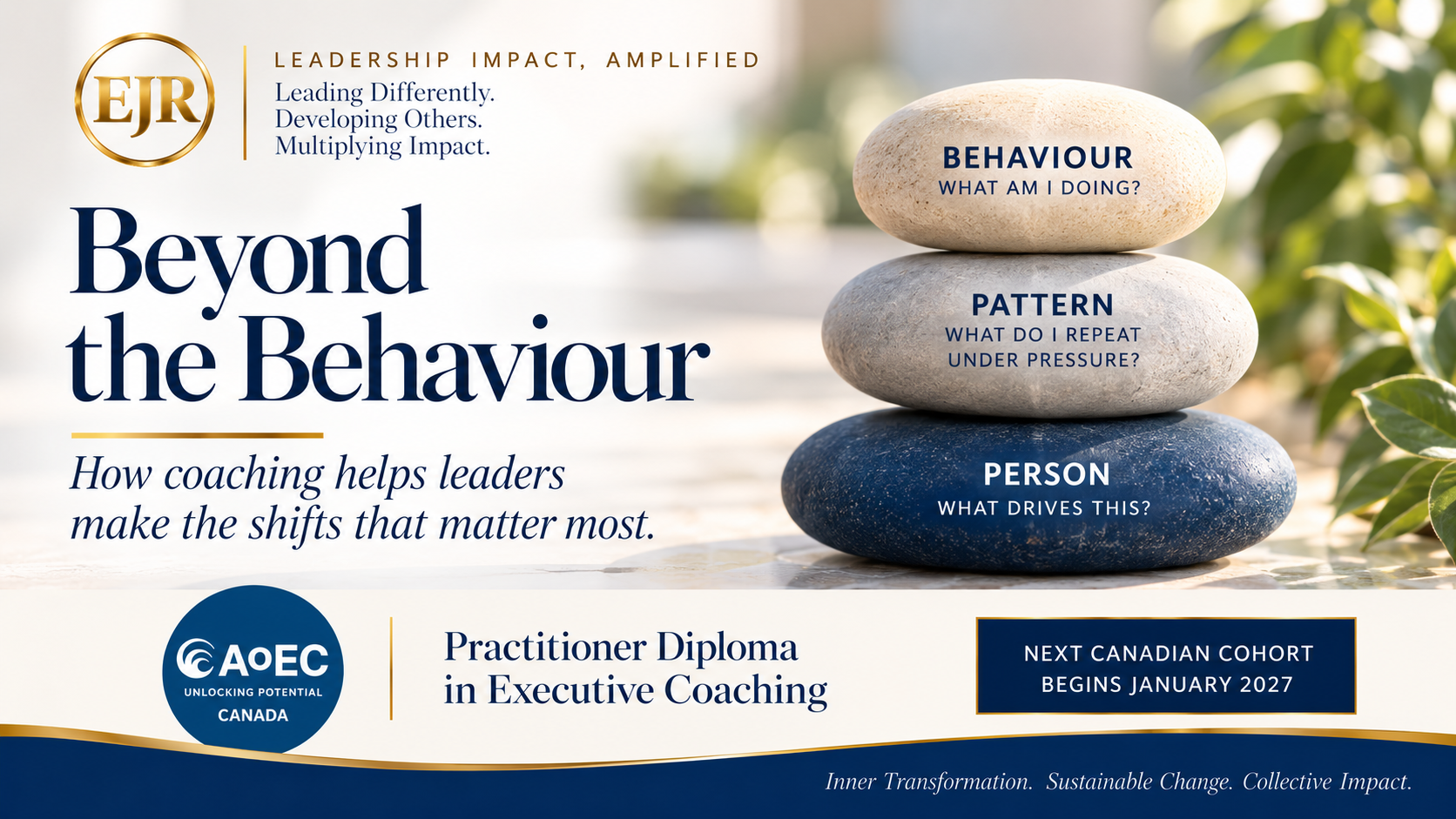
“I know I need to stop doing this.” I hear some version of that often from experienced executives. I know I jump in too quickly. I know I'm avoiding the conversation. I know I need to slow down and think more strategically. They aren't lacking insight. They can often describe the behaviour they need to change with genuine honesty, and frustration.
Yet, when the pressure is on, they fall back into default patterns. They can’t resist giving the answer. They postpone the conversation yet again. They make the decision before slowing down long enough to see the bigger picture.
Why is it so hard to change something we already know we need to change?
Over the past three articles, I explored three leadership shifts I often help leaders make. In When Being the Problem Solver Becomes the Problem, the shift was from Chief Problem Solver to Architect of Leadership - creating more space for others to think, decide and lead. In From Harmony Seeker to Courageous Truth Teller, it was recognizing that protecting relationships from discomfort can get in the way of strengthening them. And in From Fast Mover to Strategic Navigator, it was learning that sometimes the most valuable thing a leader can do is slow down so they can see what others miss.
Three leaders, with three different patterns, but if we zoom out, can you see that the behaviours that eventually start to limit these leaders are often the same ones that made them successful in the first place?
When strengths become patterns running on autopilot
The problem solver became known as someone who could figure things out and take on challenges others wouldn’t dare touch. The harmony seeker became skilled at reading people and building relationships. The fast mover learned how to create momentum, make decisions and get things done. These aren't weaknesses. They are strengths that have become deeply practised ways of leading.
That's precisely why changing them can be difficult. Telling the problem solver to "delegate more" probably isn't new information. Neither is telling the harmony seeker to "have the difficult conversation" or the fast mover to "slow down and be more strategic." They already know. They may even have the underlying skills to do it well, but they don’t trust that showing up differently will produce the past success they’ve had.
Change doesn't start with the answer
Great coaching doesn't rush to solve the presenting problem. It requires getting curious about the pattern underneath it. What happens when someone brings you a problem and you don't immediately help solve it? What makes saying the difficult thing feel risky? What happens internally when you slow down while everyone around you is pushing for action? We might also ask: What are you assuming will happen if you respond differently? What has this way of leading made possible for you - and what might it now be preventing?
The problem solver may discover that being useful has become connected to their sense of value. The harmony seeker may realize that disagreement feels like a threat to a relationship they care about. The fast mover may discover a discomfort with uncertainty when there isn't yet a clear path forward. The role of the coach isn't to diagnose the leader, but to help them discover the pattern for themselves.
Insight isn't enough
Our familiar responses have been practiced thousands of times. They are predictable and, importantly, they have worked. The alternative carries uncertainty: If I stop being the person with the answer, will I still be seen as valuable? If I risk the difficult conversation, will the relationship withstand it? If I don't move quickly, will people think I'm indecisive?
That's why intellectually understanding what needs to change rarely creates sustainable change. I work with leaders to design small, relatively low-risk experiments: ask three questions before offering an answer; say the thing you've been avoiding with both clarity and care; create space for perspectives that challenge your own before making an important decision.
Those experiments create new evidence: I can add value without having the answer. The relationship can tolerate disagreement. Slowing down can improve our decisions. Over time, the leader has more choice. The goal isn't to stop solving problems, caring about relationships or moving quickly. The goal is to shift is from automatic reaction to conscious choice.
This isn't only the work of executive coaches
Leaders themselves need to create these kinds of conversations. When someone on your team brings you a difficult problem, how quickly do you give them an answer? When someone is struggling with a relationship, do you tell them what conversation to have? When a talented leader keeps repeating a limiting behaviour, do you tell them what they need to change?
Sometimes people need direction, expertise, feedback or a clear decision. But if giving the answer becomes our default, we can inadvertently limit the people around us. Coaching asks something different: instead of demonstrating how well we can think about the problem, we become interested in expanding others’ capacity to think.
We begin asking: How can I help this person see more, think more deeply and discover what they are capable of? That requires more than a list of good coaching questions. It also requires understanding the person asking them.
The coach as instrument
The idea of the coach as instrument brings back a childhood memory. I played piano when I was young, and I still remember the man who came to our home to tune it. He was blind, and I was fascinated by his ability to hear distinctions in the notes that I couldn't hear. He developed the sensitivity to hear when something was slightly off.
Coaching isn't about "tuning" another person, of course, but it does require us to listen deeply for what isn’t obvious on the surface - which is why the quality of the instrument matters. As coaches, we aren't standing outside the conversation. We are in the room too. Our experience, instincts, assumptions, strengths, discomfort and desire to be helpful influence what we notice and how we respond.
A problem-solving coach may ask a question but already have the answer they hope the other person will discover. A harmony-seeking coach may empathize beautifully but avoid the question that could create discomfort. A fast-moving coach may become so focused on getting somewhere useful that they miss what is emerging in the silence. Our patterns don't disappear because we've learned how to coach.
We are part of the instrument through which the work happens, so developing the instrument matters.
Who are you - and how do you coach?
This is one of the things that drew me to the AoEC Practitioner Diploma in Executive Coaching, and why I am excited to bring the program to Canada. There are many places to learn coaching skills. What I find distinctive about the AoEC approach is the attention it gives not only to how you coach, but to who you are becoming as a coach.
I wish I'd known about the AoEC when I first trained as a coach. I had a good program, wonderful faculty and talented peers, but it took me a solid ten years to develop a coaching style that felt both authentic and effective. The AoEC builds that exploration into the learning. Participants encounter different coaching approaches and psychological perspectives rather than being handed one model to reproduce. They coach, are coached, observe coaching, work with practice clients, receive feedback, participate in mentor coaching, and reflect while developing their own coaching model, style and signature presence.
This matters because when I'm coaching, I'm in the room too. Can I remain curious when I think I know the answer? Can I resist rescuing someone? Can I stay with silence, challenge someone I respect, or notice when my need to be useful is interfering with their need to think? These aren't questions we answer once. They sit underneath two seemingly simple questions: Who are you? How do you coach? I don't think they can be separated. The more aware I become of the patterns I bring into the room, the more choice I have about how I respond.
This matters for leaders too. You don't need to become an executive coach to help another person see a pattern they can't yet see, think more deeply about a challenge, or discover an answer you could never have given them.
A Question to Take With You
Think about the people you lead, develop or coach. When someone is struggling, what is your automatic response - to solve, reassure, advise, accelerate, challenge, protect, or something else? What might that response provide for you, and what might it prevent the other person from discovering for themselves?
Now turn the lens back on yourself. If you are part of the instrument, what might you need to become better at hearing? Where might your strengths be shaping what you notice, what you miss, the questions you ask and the conversations you're willing to stay with?
Developing others doesn't require us to abandon the strengths that made us successful. It asks us to know ourselves well enough that those strengths become choices rather than defaults - so we can respond to what this person, this moment and this system actually need from us. That's what good coaching can make possible: not better answers, but greater capacity to see, choose and grow.
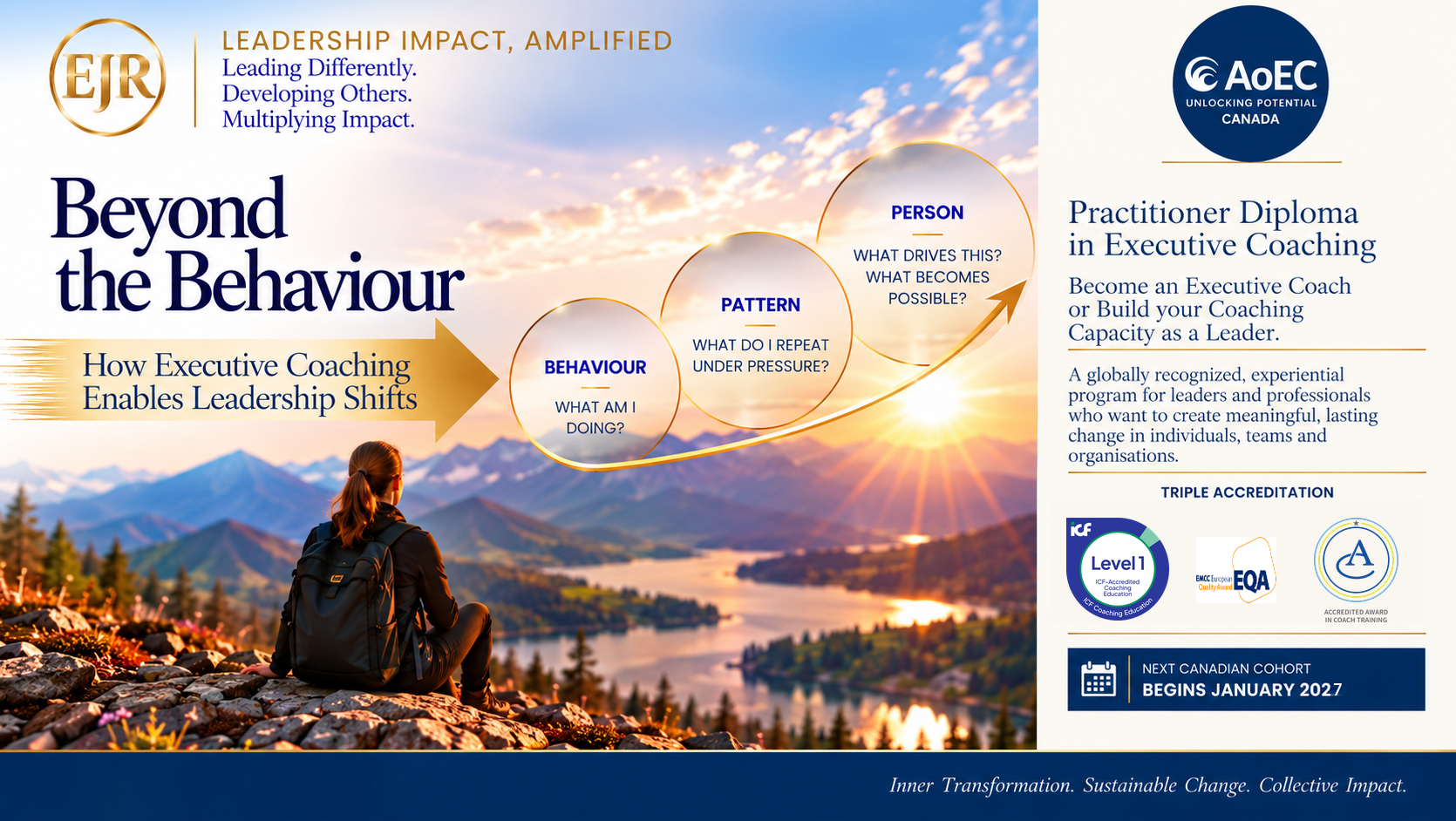
Developing Leaders Who Multiply Their Impact
EJR helps executives, teams and organizations to lead differently, develop others, and multiply their impact.
As the exclusive Canadian provider of The Academy of Executive Coaching’s Practitioner Diploma in Executive Coaching, we also develop leaders and coaches who want to build deeper coaching capability.