
When Being Indispensable Comes at a Cost
LEADERSHIP IMPACT, AMPLIFIED
October 14, 2026 · Evelina Rog, PhD, PCC
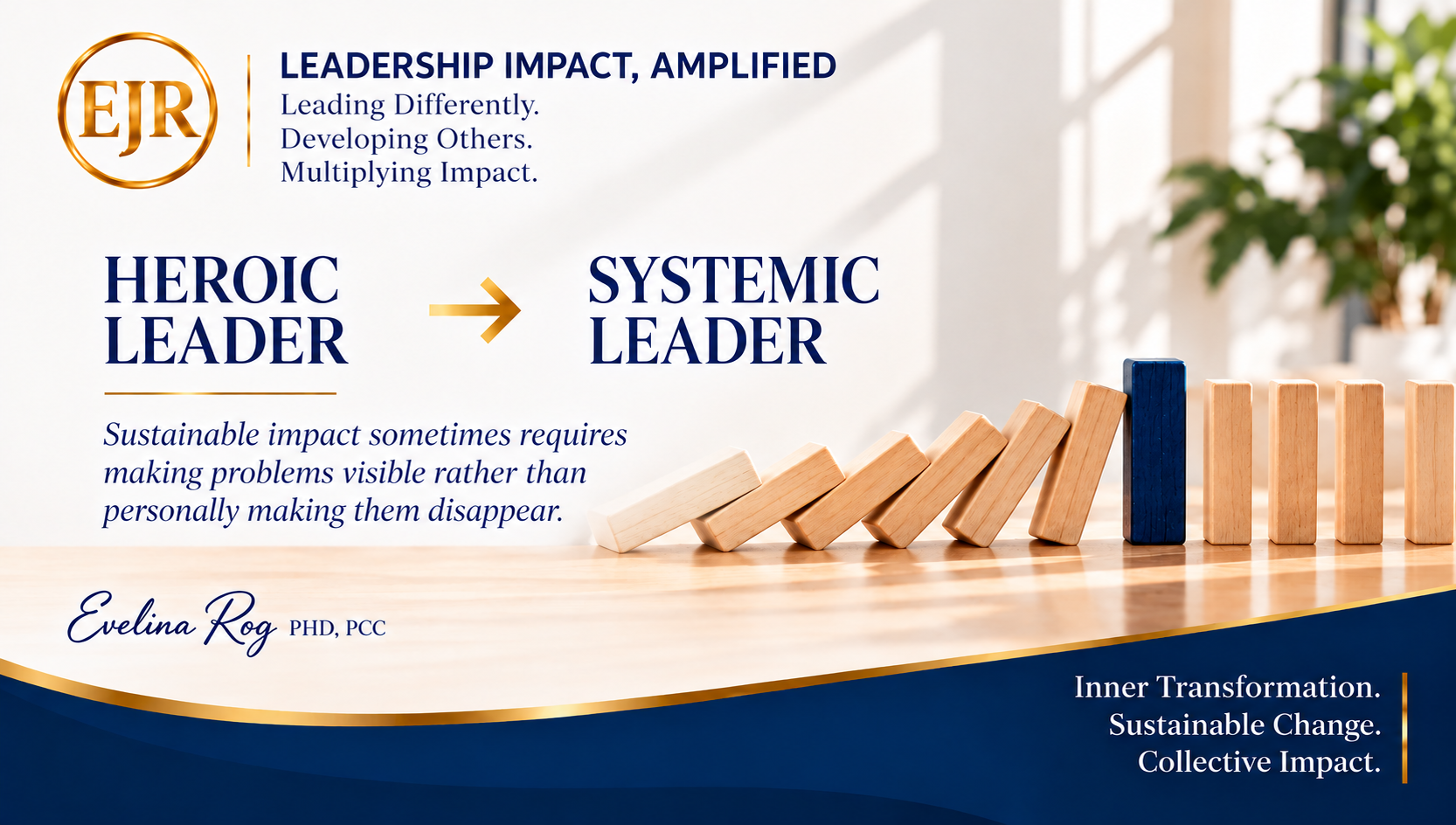
Some leaders have an extraordinary capacity to make things work. They see problems others miss, connect the dots across functions, take on difficult assignments and find ways to deliver even when resources are stretched. When something important needs attention, they are often the first people senior executives turn to.
Their capability earns them trust, influence and increasingly significant responsibilities. Over time, however, an interesting paradox can emerge. The more effectively they compensate for what isn't working, the less visible those underlying problems become.
When a function is understaffed, the leader works harder. When accountabilities are unclear, they coordinate across boundaries. When a team is struggling, they personally invest more time in getting it back on track. When another priority or team is added to their portfolio, somehow they find a way to absorb it.
The organization continues delivering. But at what cost, and for how long?
Sometimes the greatest risk isn't that a capable leader will fail. It's that they will keep succeeding in ways that allow the organization to avoid addressing what needs to change, ultimately creating risk for the organization.
When Extraordinary Capability Conceals Organizational Problems
Organizations naturally rely on heroic leaders who consistently deliver. When responsibilities expand or an important initiative is struggling, assigning it to a trusted executive can seem like the obvious solution. But adding responsibility is not the same as creating the conditions for success.
A leader may inherit a struggling function without additional resources, take on new priorities without renegotiating existing commitments, or become accountable for outcomes that depend on decisions and capabilities beyond their control. Because they are resourceful, they find ways to manage. They stretch themselves, rearrange priorities and compensate for gaps. Their success can create the impression that the arrangement is sustainable. Meanwhile, the underlying conditions remain unchanged.
The challenge is not necessarily a lack of strategic thinking or an inability to empower others. Some of the leaders most vulnerable to this pattern are already exceptionally effective at both. They can see organizational weaknesses clearly, but their commitment to results leads them to compensate for those weaknesses rather than challenge the conditions that created them. Their extraordinary capability becomes an informal solution to problems that require a more systemic response.
When the Cracks Begin to Show
I recently coached an accomplished executive whose responsibilities had expanded significantly. She was highly strategic, courageous, deeply committed to developing people and exceptionally capable of navigating complexity. She had successfully taken on substantial new responsibilities and continued receiving positive feedback about her contributions. Yet she was becoming increasingly concerned that things were beginning to slip. Some priorities weren't receiving the attention they deserved. Small imperfections felt more consequential, and criticism could trigger disproportionate self-doubt.
What interested me was the meaning she was making of those experiences. Rather than seeing the occasional missed detail as information about an increasingly stretched organizational system, she could interpret it as evidence that she wasn't performing to her own standards.
For a leader accustomed to delivering exceptional results, that interpretation can be particularly unsettling. Competence has been demonstrated repeatedly, yet a few visible cracks can suddenly call the entire track record into question.
Through coaching, we began exploring another possibility: perhaps the problem wasn't that she was becoming less effective. Perhaps the scope of her responsibilities had outgrown the structures, resources and expectations surrounding her. That distinction matters enormously.
The same evidence that appears to signal personal inadequacy may actually be pointing toward an organizational problem that needs leadership attention.
From Personal Responsibility to Systemic Accountability
There is a difference between being accountable for an outcome and personally compensating for everything that might prevent a desirable outcome. Executive leaders need to take ownership, anticipate risks and deliver results. But they also have a responsibility to identify when the conditions required for success are missing.
When a new mandate arrives, a capable leader's instinct may be to say, "No problem, I'll take care of it." A more systemic response might involve examining what the additional responsibility requires.
· What resources, capabilities or decision-making authority will be necessary?
· Which existing priorities should change?
· What dependencies need to be addressed?
· What risks are being accepted if nothing else changes?
These are not excuses for avoiding responsibility. They are essential leadership conversations about organizational capacity and sustainable performance.
The distinction becomes particularly important when performance problems emerge. It is tempting to conclude that an individual or team simply needs to work harder, become more accountable or develop stronger capabilities. Sometimes that is true.
But performance is also shaped by unclear roles, conflicting priorities, poorly designed processes, insufficient resources and leadership practices that unintentionally reinforce the very behaviours an organization wants to change. A systemic leader examines both. They remain willing to hold people accountable while questioning whether the organization has created the conditions in which people can reasonably succeed.
The Deeper Challenge: When Performance Becomes Personal
For many accomplished leaders, this shift is not simply about learning to negotiate resources or establish clearer priorities. Their sense of value may have become closely connected to their accomplishments. They have spent years being rewarded for resilience, intelligence, commitment and the ability to deliver when circumstances are difficult.
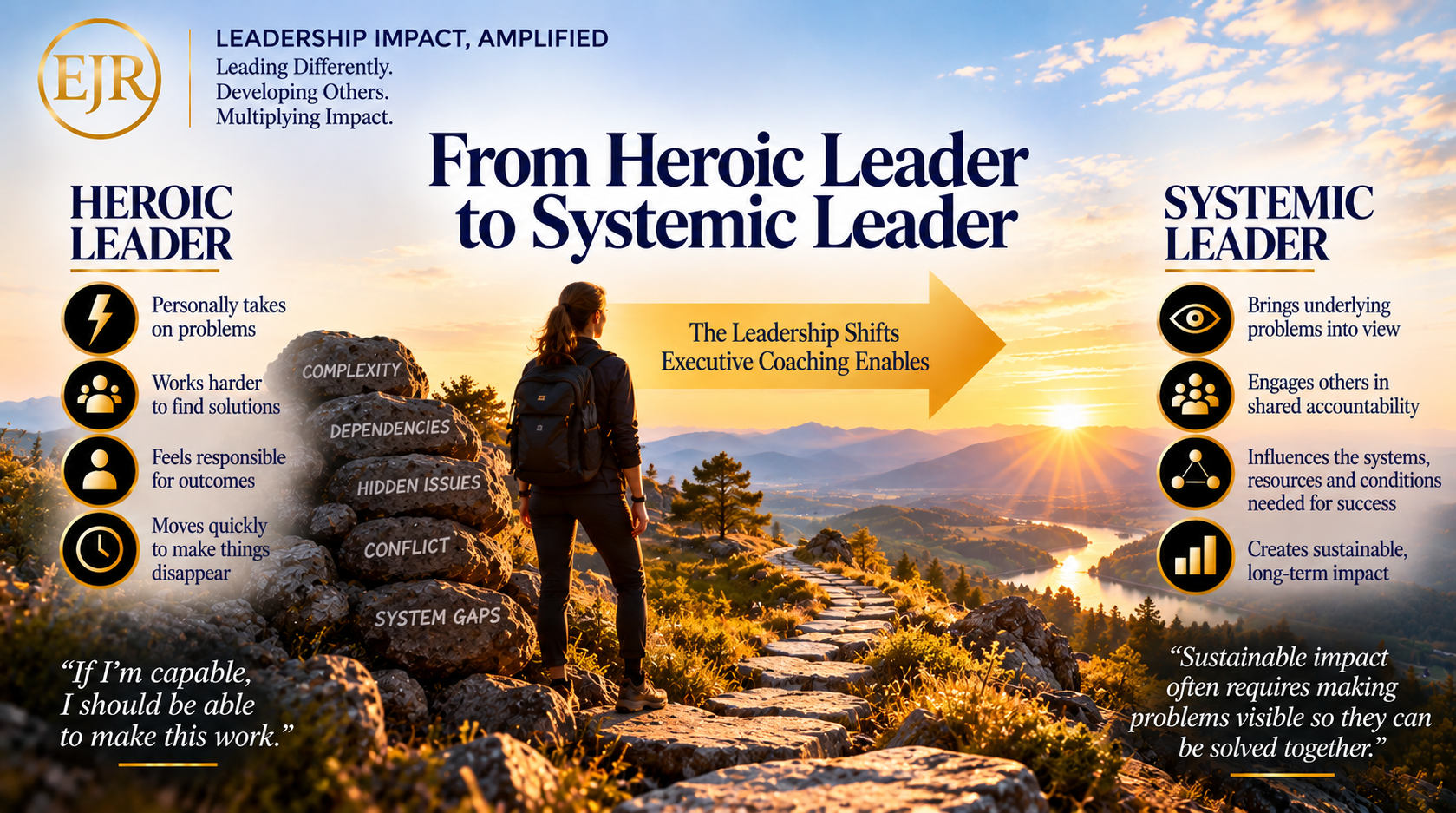
Over time, a powerful assumption can develop: If I'm truly capable, I should be able to make this work, regardless of the conditions. When something begins to slip, the leader may respond by trying harder rather than questioning the conditions surrounding the work. Asking for additional support can feel uncomfortable. Renegotiating expectations may feel like admitting they cannot handle the responsibility. Yet capability does not eliminate systemic constraints.
This is where executive coaching can go deeper than improving workload management. We explore what the leader believes about competence, responsibility and their own value. What makes it difficult to acknowledge that the current arrangement may be unsustainable? What would change if they understood that excellent leadership includes recognizing and influencing the conditions required for success?
The developmental shift involves recognizing that these assumptions are not necessarily truths. A leader can be highly capable and still face genuine capacity constraints. They can be accountable without accepting unrealistic expectations. They can demonstrate commitment by challenging an unsustainable arrangement rather than continuing to absorb its consequences.
From Seeing the System to Shaping the System
Some executives already possess exceptional systems thinking. They understand how leadership behaviour, organizational structures, culture, talent and incentives interact. They can identify patterns that others overlook. Yet seeing the system clearly is not the same as changing it. The developmental challenge is to move beyond diagnosing organizational problems toward exercising the authority to influence the structures, expectations and decisions that sustain them.
An executive may recognize that accountabilities are ambiguous, that a function lacks capacity, or that competing priorities are undermining execution. But recognizing these conditions creates little lasting value if the leader continues compensating for them without influencing the decisions that sustain them. The next developmental step for them is exercising the authority and influence to make those conditions visible and help change them.
That might mean initiating a difficult conversation about organizational design, making trade-offs explicit, challenging assumptions about available capacity, or allowing a manageable consequence to become visible rather than automatically rescuing the situation. This requires judgment. Some problems demand immediate intervention. Others require patience, collective ownership and the willingness to tolerate imperfection while a more sustainable solution is developed.
The leader's role expands from making things work within the existing system to helping the organization build a system that works better.
Systemic leadership is not just about seeing the bigger picture. It is about taking responsibility for influencing the conditions that produce the results.
From Heroic Leadership to Sustainable Impact
As the executive I was coaching began examining these patterns, an important shift emerged. Instead of immediately accepting an expanding set of responsibilities without question, she was beginning to examine what genuinely required her attention, what belonged elsewhere, and what the organization needed to address collectively. This didn't diminish her commitment or her extraordinary capability. It created the possibility of using those strengths differently.
The most effective executive leaders are not necessarily those who can absorb the greatest amount of organizational complexity. They are those who can distinguish between what they should personally address, what others need to own, and what requires changing the system itself.
The shift is from proving how much you can deliver to exercising the judgment and influence to determine what should be delivered carried, by whom, and under what conditions.
A Question to Take With You
Where might your extraordinary capacity to make things work be enabling your organization's success today - while unintentionally concealing a problem that needs to be addressed for that success to be sustainable?
Developing Leaders Who Multiply Their Impact
EJR helps executives, teams and organizations to lead differently, develop others, and multiply their impact.
As the exclusive Canadian provider of The Academy of Executive Coaching’s Practitioner Diploma in Executive Coaching, we also develop leaders and coaches who want to build deeper coaching capability.