
LEADERSHIP IMPACT, AMPLIFIED
October 28, 2026 · Evelina Rog, PhD, PCC
I am honoured to coach some extraordinarily capable executives. They care deeply about others, hold themselves to high standards and have a remarkable ability to navigate difficult circumstances. They are often the people others turn to when a relationship becomes strained, a commitment is at risk or a problem needs solving. Yet sometimes the strengths that make these leaders so valuable can begin to limit their impact.
It can look like taking responsibility for problems others need to help resolve, or compensating for organizational weaknesses rather than challenging the conditions that create them. They may involve people in decisions, yet remain responsible for ensuring everything happens afterward.
The paradox is that the more responsibility leaders take themselves, the less responsibility others are likely to take.
Over the past three articles in Leadership Impact, Amplified, I explored different expressions of this pattern. In When Caring Becomes Carrying, the challenge was distinguishing empathy from taking ownership of others’ reactions and choices. In When Being Indispensable Comes at a Cost, it was recognizing when extraordinary capability conceals systemic organizational problems. And in Accountability Isn’t Something Leaders Do, It’s Something They Enable, it was understanding why involving people in change does not necessarily mean they own all of the execution. The common question that emerged was: When does taking responsibility help others succeed, and when does it prevent them from developing the capacity to do so?
When strengths become ways of compensating
A caring leader builds trust and responds to people’s needs. The indispensable leader navigates complexity and delivers when circumstances are difficult. The conscientious leader wants commitments to become meaningful progress. These are important strengths; the difficulty arises when they become automatic responses to almost every challenge.
When someone is unhappy, the leader tries to make things right. When a function struggles, the leader absorbs more work so as to avoid burdening others. A team agrees to a change, so the leader creates the plan, tracks commitments and takes responsibility for following up. Each response may be appropriate in a particular situation. Repeated often enough, however, it can make the leader central to difficulties that others could - and sometimes should - address themselves. Their effectiveness inadvertently reinforces dependence. This makes it nearly impossible for them to scale their leadership.
The internal assumptions beneath taking responsibility
What interests me in coaching is not simply what leaders do, but what makes their go-to responses feel necessary. A leader who takes responsibility for disappointing others may equate good leadership with keeping relationships intact. Someone who repeatedly accepts more work may have learned that their value lies in delivering regardless of conditions. A leader who monitors every commitment may worry that progress will stall without their attention.
These assumptions have often been rewarded. The executive who goes the extra mile earns trust; the person who makes the impossible work becomes indispensable; the leader who personally ensures follow-through is known for results. Eventually, a powerful belief can emerge: If I am truly effective, I should be able to make this work. Yet executive leadership requires asking a different question - not only what can I accomplish, but what can I make possible through others?
Scaling leadership requires shifting from being the doer to being the enabler – the leader who creates the conditions for others to step up into leadership.
Where responsibility needs to shift
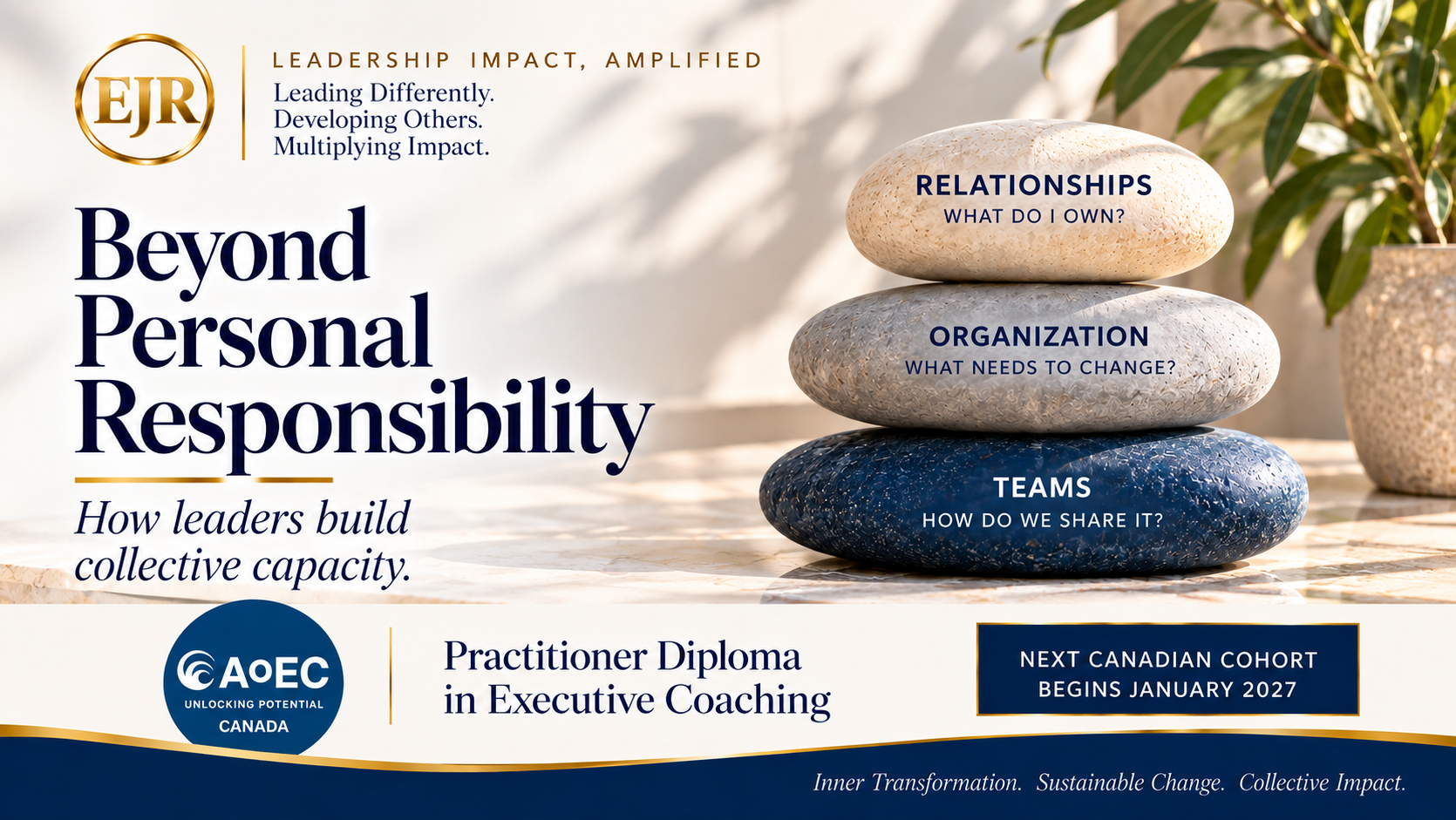
Within relationships, leaders need to care about their impact, acknowledge mistakes and respond thoughtfully. But another person’s frustration or disappointment does not automatically mean the leader has done something wrong or must remove the discomfort. The developmental shift we work on in coaching is to own one’s contribution while allowing others to own theirs, without withdrawing care or engagement.
Within organizations, resourceful executives can compensate for unclear accountabilities, competing priorities and insufficient capacity. Their success may make a fragile arrangement appear sustainable. The shift they need to make is from personally making things work to using judgment and influence to make constraints visible, negotiate trade-offs and improve the conditions required for success.
Within teams, inviting people to identify problems is not the same as developing shared ownership. If the leader alone translates input into plans, tracks progress and addresses missed commitments, accountability remains a leader’s personal responsibility. The shift is to involve people in defining expectations, reviewing evidence and deciding what they will do when commitments slip. Across all three contexts, the leader must discern what belongs to them, to others, and to the system.
Why stepping back can feel so difficult
We often describe these changes as delegating more, setting boundaries or asking better questions. Those skills matter, but they may not address the underlying concern. For a leader whose identity is connected to being dependable, stepping back can feel like letting people down. For a highly capable executive, exposing a capacity problem can feel like admitting inadequacy. For a conscientious leader, expecting others to own commitments can feel risky when the consequences still affect them.
In coaching, we explore what the leader anticipates if they respond differently:
What if the other person remains unhappy?
What if I make the constraint visible instead of working around it?
What if I ask the team to account for its own progress?
The leader may be protecting something important - their relationships, reputation, standards, or sense of value. Recognizing this makes it possible to choose differently without letting go of the strengths that brought them success.
From carrying responsibility to fostering ownership
The work then becomes experimentation. One leader acknowledges frustration without immediately trying to resolve it. Another examines resources, authority and trade-offs before accepting a new mandate. Another asks team members to determine how they will review commitments and respond when progress stalls. These are small shifts, but they challenge deeply practiced ways of demonstrating leadership.
The learning comes from what happens next. I encourage leaders to not only pay attention to how people react, but especially to notice whether their assumptions were true. Perhaps the relationship withstands disappointment, rather than being damaged. Perhaps making a capacity problem visible produces a more realistic organizational decision. Perhaps team members take greater ownership when they are expected to examine their own commitments. Not every experiment succeeds, and some situations require direct intervention. The goal is not to stop helping, but to develop greater choice about when help is useful and when it displaces someone else’s responsibility.
The leader and coach - as an instrument
There is a parallel here for those of us who coach. A coach who values being helpful may rush to reassure a client, subtly steer toward a solution, or become overly invested in whether the client follows through. Our intentions may be positive, but the same question applies: whose responsibility are we carrying? In Blog #4, Beyond the Behaviour - How coaching helps leaders make the shifts that matter most, I explored the coach as instrument - the idea that our assumptions, strengths and discomfort shape what we notice and how we respond.
If I am uncomfortable when a client struggles, I may rescue them from an experience that could generate important learning. Leaders face the same tension when developing others. Sometimes people need direction, expertise or intervention. At other times, the most valuable contribution is to resist doing something we are exceptionally good at, so someone else can develop their own capacity. That takes trust, clarity and the judgment to know when stepping back is appropriate.
Multiplying Impact by Developing Others
Across these three articles, one distinction stands out: being accountable for results does not mean personally carrying everything required to achieve them. Leadership impact multiplies when we discern what we need to own, what others can own, and what must change in the system. We use our capabilities to develop others and create the conditions for collective success, without caring less or lowering our standards.
Developing the Coach Behind the Coaching
The same challenge shapes our development as coaches. Our desire to help, instinct to solve problems and discomfort with another person’s struggle influence the coaching conversation. Effectiveness requires recognizing when our needs or assumptions get in the way and becoming more intentional about how we use ourselves in service of the client.
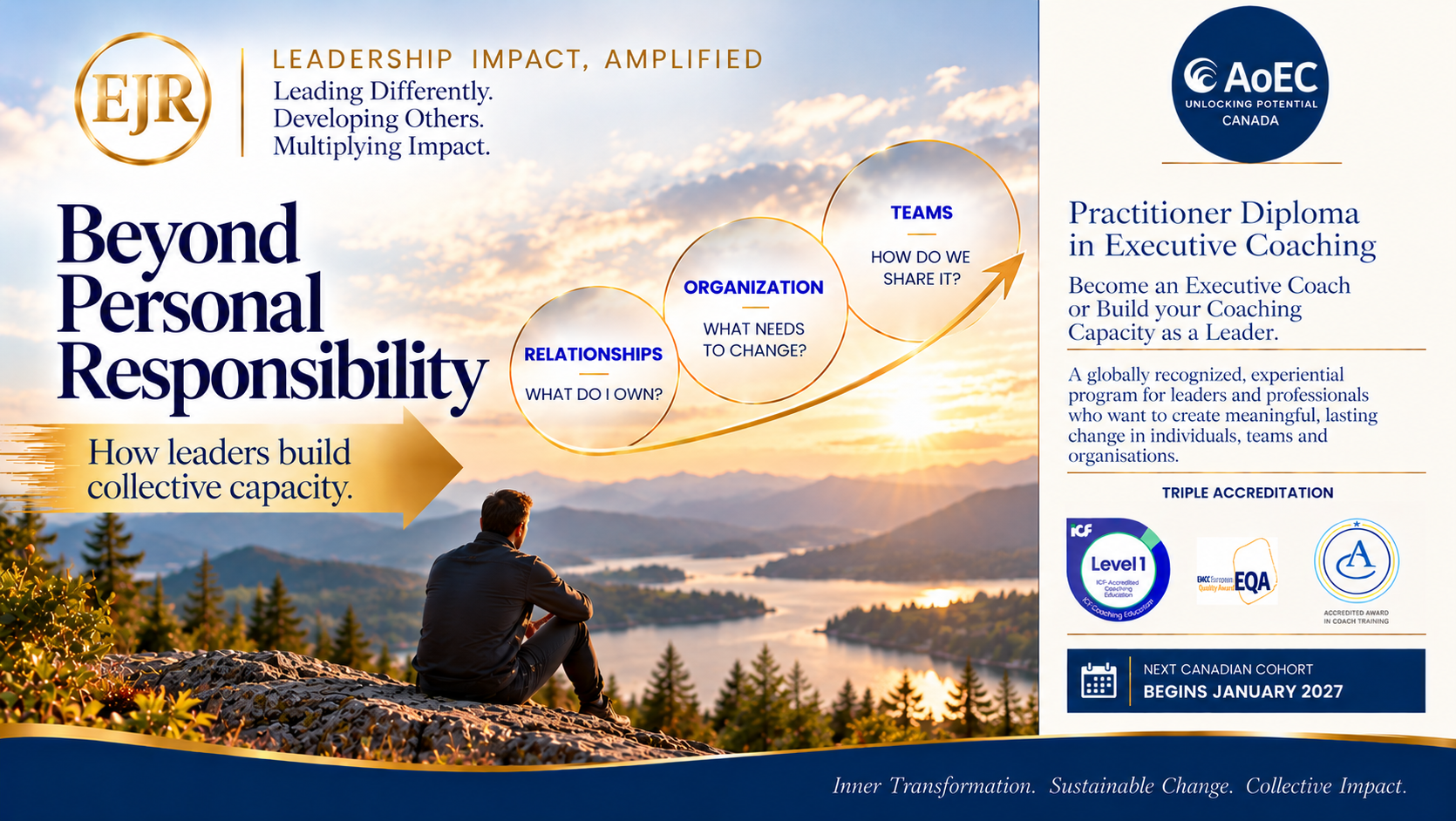
This is one of the things I particularly value about the AoEC Practitioner Diploma in Executive Coaching I deliver. Rather than teaching participants to reproduce a prescribed coaching model, the program exposes them to different coaching approaches and psychological perspectives, with extensive opportunities to practice, experiment, receive feedback and reflect on their experience. Through that process, they begin to understand not only what works in coaching, but what works for them, why, and how their own presence influences the relationship.
Participants are supported in developing their own signature coaching approach, grounded in their strengths, values, experiences and growing self-awareness. The goal is not to create coaches who all sound alike or rely on the same techniques. It is to develop thoughtful, adaptable practitioners who understand themselves as an instrument of change, can draw on a range of approaches and exercise the judgment to respond to what each client needs.
The more aware we become of how we influence others, the more intentional we can be about helping them develop their own capacity rather than relying on ours.
A Question to Take With You
Where are you investing the greatest amount of effort as a leader? How much of that effort develops others’ capacity to take responsibility, and how much compensates for responsibility they have not yet taken - or organizational conditions that have not yet changed? What might become possible if you carried less of what belongs to others and invested more in helping them carry it well?
Developing Leaders Who Multiply Their Impact
EJR helps executives, teams and organizations to lead differently, develop others, and multiply their impact.
As the exclusive Canadian provider of The Academy of Executive Coaching’s Practitioner Diploma in Executive Coaching, we also develop leaders and coaches who want to build deeper coaching capability.