
LEADERSHIP IMPACT, AMPLIFIED
October 21, 2026 · Evelina Rog, PhD, PCC
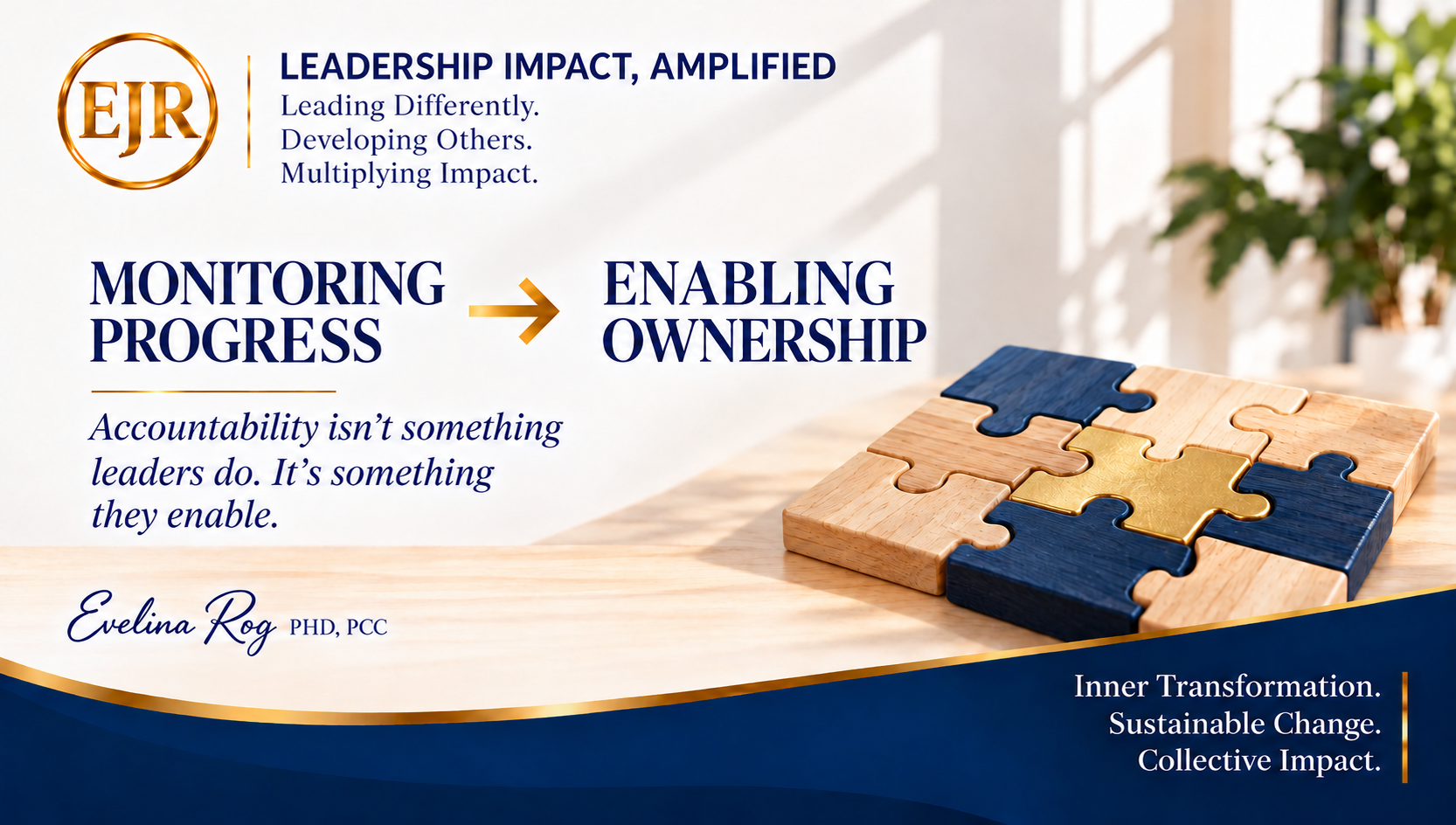
An executive I was coaching had been working with her team to understand what was getting in the way of working well together. She had invited people to describe what a great team would look like, identify what wasn’t working and help shape practical changes. Now she was wrestling with what came next.
How closely should she track whether individuals followed through?
Should the commitments become part of performance reviews or promotion decisions?
Should she measure each initiative, or look more broadly at whether people were happier and more engaged?
How could she bring people along at a reasonable pace, without turning an aspirational picture of the team into an overnight change in individual expectations?
These were thoughtful questions from a leader who wanted the work to matter. She was trying to build accountability without creating anxiety around the very process intended to improve how the team worked together. Her dilemma captures a challenge I see many leaders face: how do we turn a good conversation into something people take responsibility for?
Turning team input into shared commitment
Inviting a team to speak openly can feel vulnerable. People may have different accounts of the problem, different levels of trust, and different expectations of what the leader will do with what they hear. Reaching a shared picture of a better future can feel like meaningful progress. But there is still a considerable distance between describing that future and changing everyday behaviour.
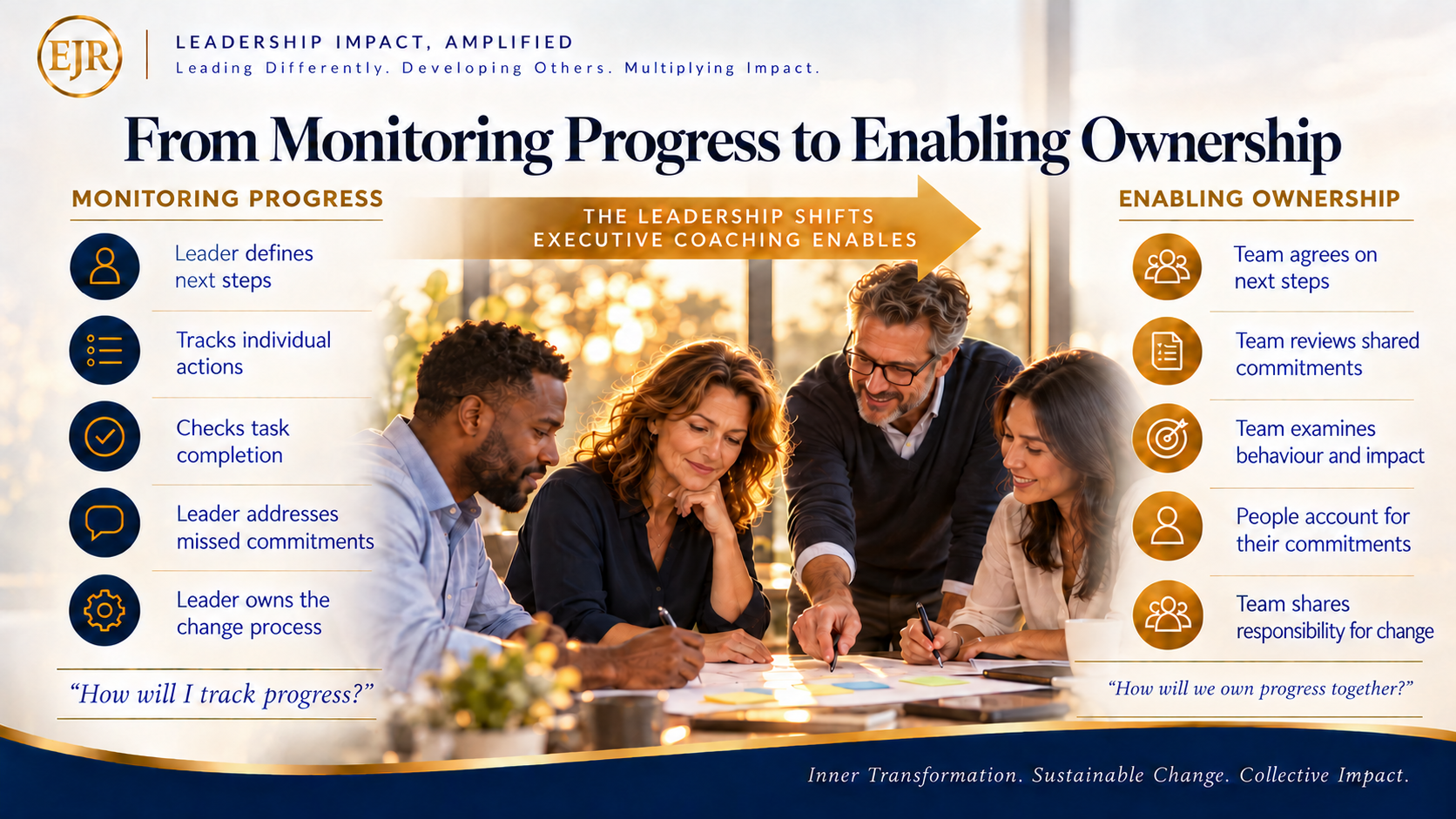
This is often where I sometimes see accountability becoming a leadership project – something the leader feels they need to do to others. The leader gathers the feedback, organizes the priorities, translates them into actions and decides how to monitor progress. Team members have contributed to the conversation, yet the responsibility for making it work can quietly return to the leader.
The executive’s questions brought that next step into focus. She was considering both individual follow-through and the team’s experience. Those are different things. People might feel better because concerns have finally been heard, while established patterns continue. They might also be doing the difficult work of changing while finding the experience uncomfortable. Neither sentiment nor a completed action list, on its own, tells the whole story.
When an invitation starts to feel like an assessment
Her concern about suddenly changing expectations was particularly important. A team can be invited to imagine its ideal way of working without yet understanding what it is committing to do. Someone might endorse better communication while having a different view of what that requires, how much time it will take or which responsibilities should change.
If those ideas quickly become individual measures, people may experience a change in the meaning of the original conversation. What began as an invitation to be candid can start to feel like an assessment of whether they are living up to a standard they helped describe but have not yet worked through.
That does not make measurement the problem. It makes the transition from aspiration to agreement important. Before assessing whether people are adhering to the plan, there needs to be enough shared understanding of what people are agreeing to, what is expected now, and what will take time to develop.
Many leaders encounter some version of this tension. They want people to have a voice and they also need results. Under pressure to show progress, it can be tempting to move quickly from consultation to a set of expectations. Yet participation in identifying a problem is only the beginning of taking ownership of the response.
Who owns what happens next
For this leader, the next question was larger than choosing the right measures. It was how to make follow-through part of the team’s work together. The team had helped describe a better way of working. How could its members also help determine what they would do differently, how they would recognize progress, and how they would respond when commitments slipped?
There is a meaningful difference between being asked to report compliance to a plan and being expected to account for a commitment. In the latter, a person needs to be able to explain what they agreed to, what happened, what they are learning and what they will do next. The leader can still ask difficult questions, and makes judgment. The key is ensuring the team member remains an active participant in making sense of the gap and addressing it.
That has implications for how progress is reviewed. Imagine a team that wants fewer surprises between functions. A useful conversation would examine whether people are raising risks early enough, whether that information reaches the people who need it, and what happens when someone flags a concern.
The leader’s response when risks and concerns are raised will have an amplified impact. If people are asked to surface problems early, what happens when they do? If the team agrees to be more realistic about commitments, can it question a deadline or flag competing demands? Accountability gains credibility when the agreements shape the leader’s behaviour as well as everyone else’s.
The discomfort of building accountability
The executive I was coaching wanted to introduce changes at a pace that gave people a fair opportunity to adapt. Even with thoughtful pacing, making expectations explicit can bring discomfort as people discover they have different views of what they are committing to. Reviewing a commitment can reveal that someone needs support, has underestimated the work, or has not followed through.
A developmental approach still needs to make room for those judgments. People can understand a conversation, agree with feedback and express good intentions while their behaviour stays the same. Over time, the evidence needs to include what people actually do and whether the changes make a difference to the work.
For leaders, this requires judgment about the discomfort they are seeing. Is someone uncertain about the expectation, learning a new way of working or resisting a responsibility that has been made clear? Those possibilities call for different responses. Simply removing the discomfort or increasing the pressure can leave the real issue unexplored.
Coaching creates space to examine that judgment. A leader may need to consider what they assume will happen if they make expectations more explicit, or what they fear will happen if they do not monitor every commitment themselves.
The work is to become more deliberate about how they use their authority while strengthening other people’s capacity to exercise responsibility.
From inviting input to developing ownership
What makes this executive’s challenge useful is that she had already invested in listening and involving people. Her question arose at the point where that investment needed to become a different way of working. The next step required more than a thoughtful team conversation, and more than deciding what she should track.
Many leaders will recognize that moment. People have been heard, possibilities have been identified and there is a desire to move forward. The opportunity is to keep people involved in defining the commitments, examining progress and addressing what happens next. That is how accountability can become part of the team’s everyday relationships, with the leader actively participating in it.
Accountability isn’t something we do to other people. We build it through agreements people understand, responsibilities they can act on, and conversations in which each person is expected to take their part seriously.
A Question to Take With You
Think about a change your team has agreed it wants to make. How involved are team members in deciding what they will own, how progress will be reviewed, and what happens when a commitment is missed?
Developing Leaders Who Multiply Their Impact
EJR helps executives, teams and organizations to lead differently, develop others, and multiply their impact.
As the exclusive Canadian provider of The Academy of Executive Coaching’s Practitioner Diploma in Executive Coaching, we also develop leaders and coaches who want to build deeper coaching capability.